
Target species
Made for the work of predator control.
The K1 is designed around the field task: carrying, setting, checking and resetting traps across real conservation programmes. Here are the species it is intended to address, and where further testing is still needed.
Stoats, ferrets and weasels
Fast-moving predators put serious pressure on native birds. The people covering that country need a trap that remains straightforward to carry, set and check, visit after visit.
At 3.7 kg with its tunnel built in, the K1 can travel across a network without separate wooden boxes. Lift the lid to set the action without tools; a capture flag helps teams check a long line efficiently. Explore the K1 features →

Stoats
Small, agile and ranging across forest, grassland and coastal habitat, stoats are a major threat to native birds and young. The K1’s compact integrated tunnel helps teams carry stations into the field; the lift-to-set lid and capture flag support repeated setting and checking.
Ferrets
The largest mustelid in New Zealand, ferrets work open country and habitat edges and threaten ground-dwelling birds, including kiwi and weka. Ferrets are within the K1’s stated target range. Its enclosed action and integrated tunnel avoid separate housing, while tool-free setting supports field use.
Weasels
Smaller and less common than stoats or ferrets, weasels still prey on birds, eggs, lizards and invertebrates. The K1 could support a managed mustelid line; confirm current weasel-specific documentation and setup before making a performance claim.

Hedgehogs
A familiar animal, but an overlooked predator. Hedgehogs eat native lizards and invertebrates and can take eggs and chicks of ground-nesting birds. They matter wherever a programme is restoring wildlife at ground level.
The K1 provides an enclosed ground-level station for targeted lines. Its removable entrance and bait well help teams clear, re-bait and maintain traps on regular rounds.
Beyond Aotearoa
Small Indian mongoose and American mink are serious invasive predators in restoration landscapes overseas. DOC 200 traps are used for mongoose control, while DOC 200 and 250 traps are used for mink control. Feedback from the New Zealand market tells us the K1 is a better field tool for this work. Its built-in tunnel, easy carrying, lift-to-set action and straightforward maintenance are just some of the reasons.
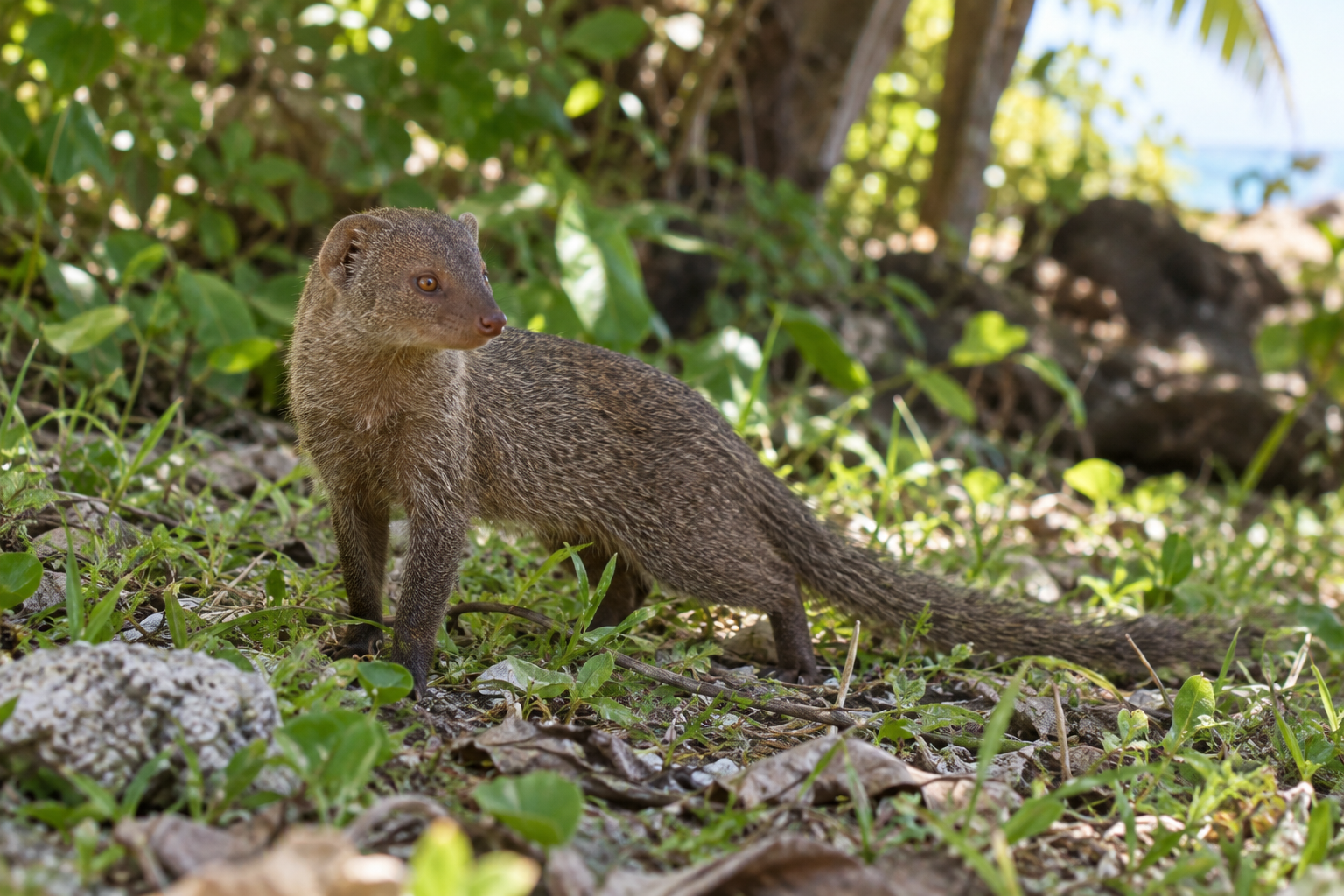
Small Indian mongoose
Introduced to many islands, this agile ground predator threatens native birds and other small wildlife around nesting areas and habitat edges. For mongoose-control teams, the K1 puts trap and tunnel into one portable station that is straightforward to set and service.
American mink
This semi-aquatic predator puts pressure on wildlife along waterways, including water voles and breeding birds. The K1’s self-contained station and visible capture flag suit repeated checks on long river-corridor trap lines.

NAWAC testing status
The K1 has not yet been tested against NAWAC trap-welfare guidelines for small Indian mongoose or American mink. We are not claiming a NAWAC humane-performance result for either species. We do not anticipate difficulty meeting the guideline’s requirements when species-specific testing is completed.
Rats
Ship rats and Norway rats both take native wildlife, but move through a site differently. Good placement begins with knowing which rat is present. The K1 belongs within a programme’s wider control network, not as a replacement for every rat-control tool.

Ship rat
A skilled climber moving through forest vegetation, taking eggs, chicks and invertebrates. In a ground-based network, the K1’s integrated station is practical to carry into difficult country and service repeatedly; placement follows local monitoring.
Norway rat
More strongly associated with ground, coast and burrows. On islands and shorelines it can be especially damaging to seabirds and young. The K1’s enclosed tunnel offers a ready-to-deploy ground station, with tool-free setting and accessible servicing for long routes.
Plan for the species in your place.
Target mix, habitat, access and servicing interval all matter. Tell us about your programme and we can discuss whether the K1 is a useful fit—and arrange a hands-on demonstration.